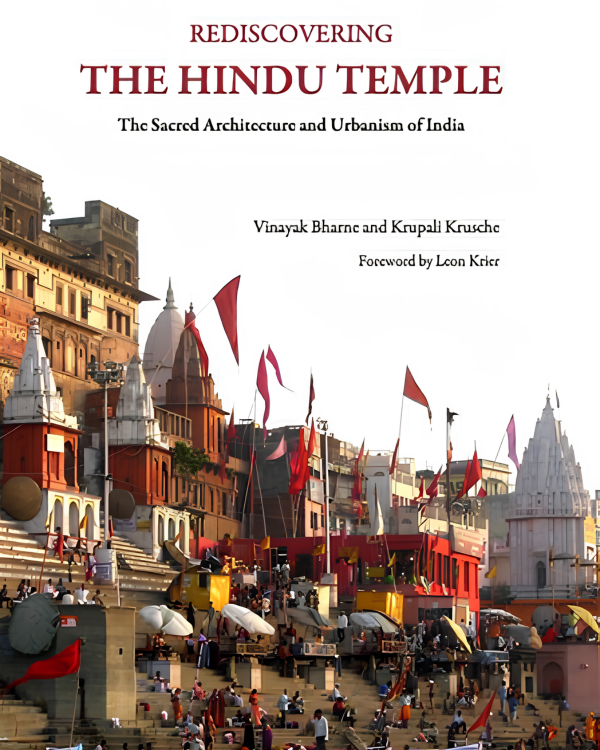
Published by Cambridge Scholars Publishers, London, UK, 2013
This volume examines the multifarious dimensions that constitute the workings of the Hindu temple as an architectural and urban built form.
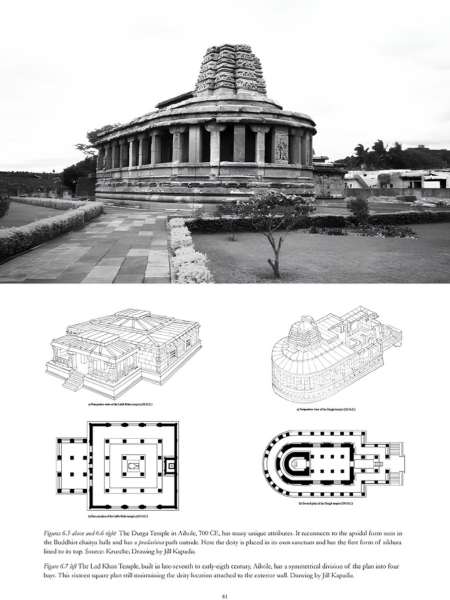
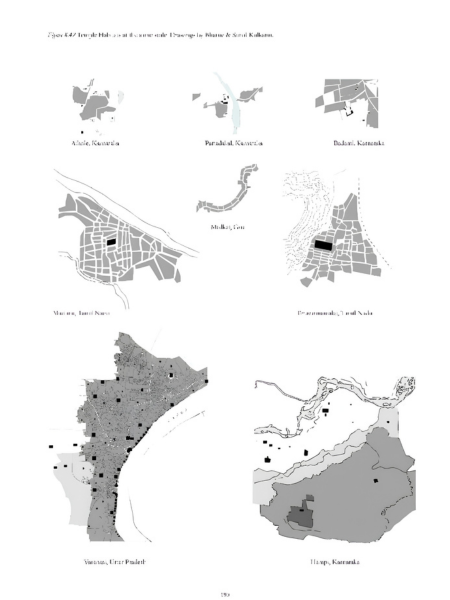
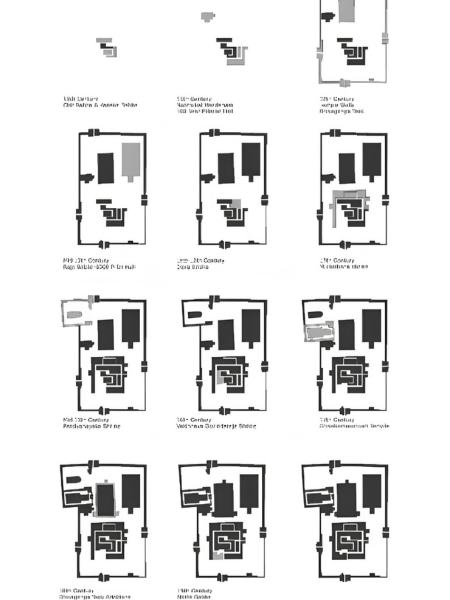
Eleven chapters reflect on Hindu temples from multiple standpoints tracing their elusive evolution from wayside shrines as well as canonization into classical objects; questioning the role of treatises containing their building rules; analyzing their prescribed proportions and orders; examining their presence in, and as, larger sacred habitats and ritualistic settings; and affirming their influential role in thecontemporary Indian metropolis.
Going beyond stereotypical presentations of Hindu temples dominated by chronological and stylistic themes, this study, addressed to architects, urbanists, and builders, combines historic scholarship, documentation, personal observations and fieldwork to expand the idea of the Hindu temple as a complex and contradictory cultural entity, that is both formal and informal, monumental and modest, historic and modern, and deserving of a far broader and deeper understanding.
“…a masterful study on the evolution, existence, continuity, transformation, and contemporary networking systems of Hindu temples…”
Rana P. B. Singh
Professor & Head, Department of Geography
Banaras Hindu University, India

Urban Designer & City Planner
Los Angeles, USA
Vinayak Bharne, AICP, is an urban designer and city planner whose 25-year career spans practice, research, education and advocacy. His work includes projects across the United States, Canada, India, Australia, China, the United Arab Emirates, Panama, Kenya and Mauritius.
Pages
Contact
©2026. All Rights Reserved.
Created By Ouriken